
High Pressure XRD with Diamond Anvil Cells on Laboratory Diffractometers
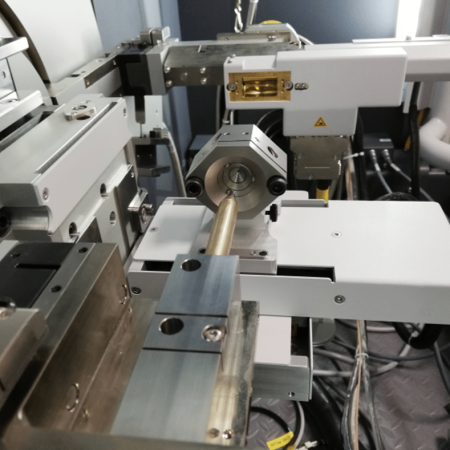
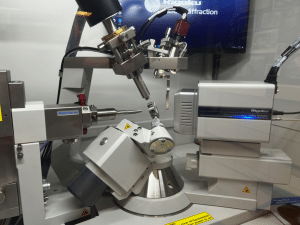
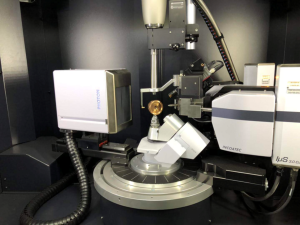
Diamond anvil cells (DACs) enable X‑ray diffraction (XRD) measurements at pressures from a few gigapascals up to several hundred gigapascals. Although synchrotron facilities remain the standard for extreme‑pressure research, DAC experiments can also be performed effectively on laboratory diffractometers, including systems from Bruker, Rigaku, and Malvern Panalytical.
What to Expect from Laboratory Instruments
Laboratory XRD systems offer lower X‑ray flux, longer acquisition times, and higher background compared with synchrotron beamlines. Even so, they are well suited for a wide range of high‑pressure studies, including:
- Phase transition analysis — tracking structural changes as pressure increases;
- Equation‑of‑state measurements — determining compressibility and volume–pressure relationships;
- Pressure‑dependent structural evolution — monitoring peak shifts and broadening;
- Phase identification and lattice‑parameter refinement.
Users should maintain realistic expectations: data quality will not match synchrotron performance, but laboratory systems remain powerful tools for many applications.
Instrument and Geometry Considerations
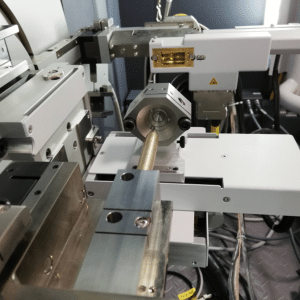
Most commercial diffractometers can accommodate a DAC provided there is sufficient goniometer clearance and appropriate mounting hardware.
Because the DAC body obstructs part of the diffraction cone, the accessible 2θ range is reduced, limiting the number of measurable reflections.
For this reason, laboratory‑based DAC studies typically emphasize phase identification and pressure‑driven structural trends rather than full structural solutions.
Sample Preparation Guidelines
Successful DAC measurements rely heavily on careful sample preparation:
- Sample size: typically 10–100 μm;
- Sample thickness: generally <20 μm;
- Powder samples are easier to measure than single crystals.
Gaskets are commonly fabricated from Rhenium, Steel, or Inconel, with a small drilled chamber to hold the sample.
Frequently used pressure‑transmitting media include methanol–ethanol mixtures and silicone oils.
Data Quality and Pressure Calibration
X‑rays must pass through diamonds, gasket material, and the pressure medium, which reduces peak intensity and increases background. High‑quality data typically require:
- Precise alignment;
- Appropriate collimation;
- Longer exposure times.
Pressure is measured independently, most often using Ruby fluorescence or an internal standard such as Au or NaCl.
Recommendations for First‑Time Users
For researchers new to DAC experiments on laboratory diffractometers, the following approach is recommended:
- Begin with simple powder samples;
- Work at moderate pressures (≤20–30 GPa);
- Use short scans and limited angular ranges;
- Focus on pressure‑dependent trends rather than detailed refinements;
- Seek training or expert guidance before starting;
With proper preparation and realistic expectations, DACs can be used effectively on standard laboratory diffractometers to support a broad range of high‑pressure research.

'%3e%3cg id='Final-Copy-2_2_' transform='translate(1275.000000, 200.000000)'%3e%3cpath class='st0' d='M7.4,12.8h6.8l3.1-11.6H7.4C4.2,1.2,1.6,3.8,1.6,7S4.2,12.8,7.4,12.8z'/%3e%3c/g%3e%3c/g%3e%3c/g%3e%3cg id='final---dec.11-2020'%3e%3cg id='_x30_208-our-toggle' transform='translate(-1275.000000, -200.000000)'%3e%3cg id='Final-Copy-2' transform='translate(1275.000000, 200.000000)'%3e%3cpath class='st1' d='M22.6,0H7.4c-3.9,0-7,3.1-7,7s3.1,7,7,7h15.2c3.9,0,7-3.1,7-7S26.4,0,22.6,0z M1.6,7c0-3.2,2.6-5.8,5.8-5.8 h9.9l-3.1,11.6H7.4C4.2,12.8,1.6,10.2,1.6,7z'/%3e%3cpath id='x' class='st2' d='M24.6,4c0.2,0.2,0.2,0.6,0,0.8l0,0L22.5,7l2.2,2.2c0.2,0.2,0.2,0.6,0,0.8c-0.2,0.2-0.6,0.2-0.8,0 l0,0l-2.2-2.2L19.5,10c-0.2,0.2-0.6,0.2-0.8,0c-0.2-0.2-0.2-0.6,0-0.8l0,0L20.8,7l-2.2-2.2c-0.2-0.2-0.2-0.6,0-0.8 c0.2-0.2,0.6-0.2,0.8,0l0,0l2.2,2.2L23.8,4C24,3.8,24.4,3.8,24.6,4z'/%3e%3cpath id='y' class='st3' d='M12.7,4.1c0.2,0.2,0.3,0.6,0.1,0.8l0,0L8.6,9.8C8.5,9.9,8.4,10,8.3,10c-0.2,0.1-0.5,0.1-0.7-0.1l0,0 L5.4,7.7c-0.2-0.2-0.2-0.6,0-0.8c0.2-0.2,0.6-0.2,0.8,0l0,0L8,8.6l3.8-4.5C12,3.9,12.4,3.9,12.7,4.1z'/%3e%3c/g%3e%3c/g%3e%3c/g%3e%3c/g%3e%3c/svg%3e) Your Privacy Choices